Subscription growth: Building the recurring revenue engine

Architecting the auto refill ecosystem to drive a 35% lift in enrollment and a 10% increase in long-term subscriber retention.
A bento-style isometric composition of the Aviary Design System UI library. It showcases a diverse range of modular components including high-fidelity buttons, semantic alert banners (Critical, Warning, Info), form inputs, segmented tabs, and navigation menus. The visual style is clean and modern, demonstrating a cohesive brand identity across various UI states and variants.

Context

Context

Fullscript 2023-2024

Fullscript 2023-2024

Role

Role

Lead Product Designer

Revenue

Revenue

1 billion (2025)

Context

Fullscript lacked a structured way to incentivize long-term patient adherence. High-intent patients frequently forgot to reorder, leading to a "leaky" retention funnel where repeat purchases were lost to competitors. I led the end-to-end design for the platform’s first subscription ecosystem, transforming one-time transactions into a predictable "wellness partner" model that significantly increased customer lifetime value.

Challenges

The blank canvas
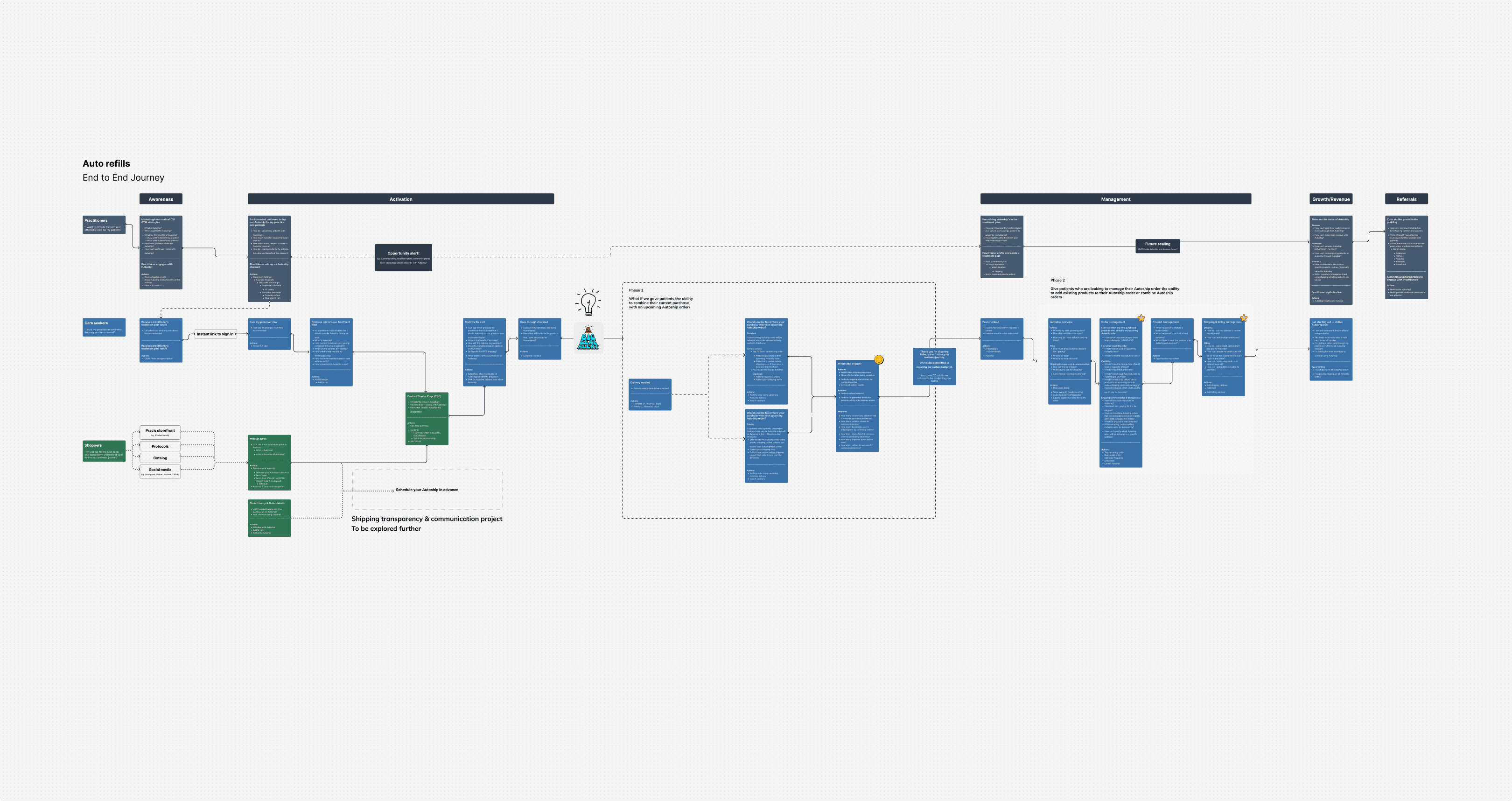
No framework existed for recurring revenue. I had to map the entire user experience from scratch to ensure the system felt like a helpful support tool rather than a rigid billing commitment.

Cross-functional orchestration
I worked as a strategic partner to the product manager to define the core business logic, collaborating with marketing, account managers, and engineering to build a brand new refill engine.

The incentive paradox
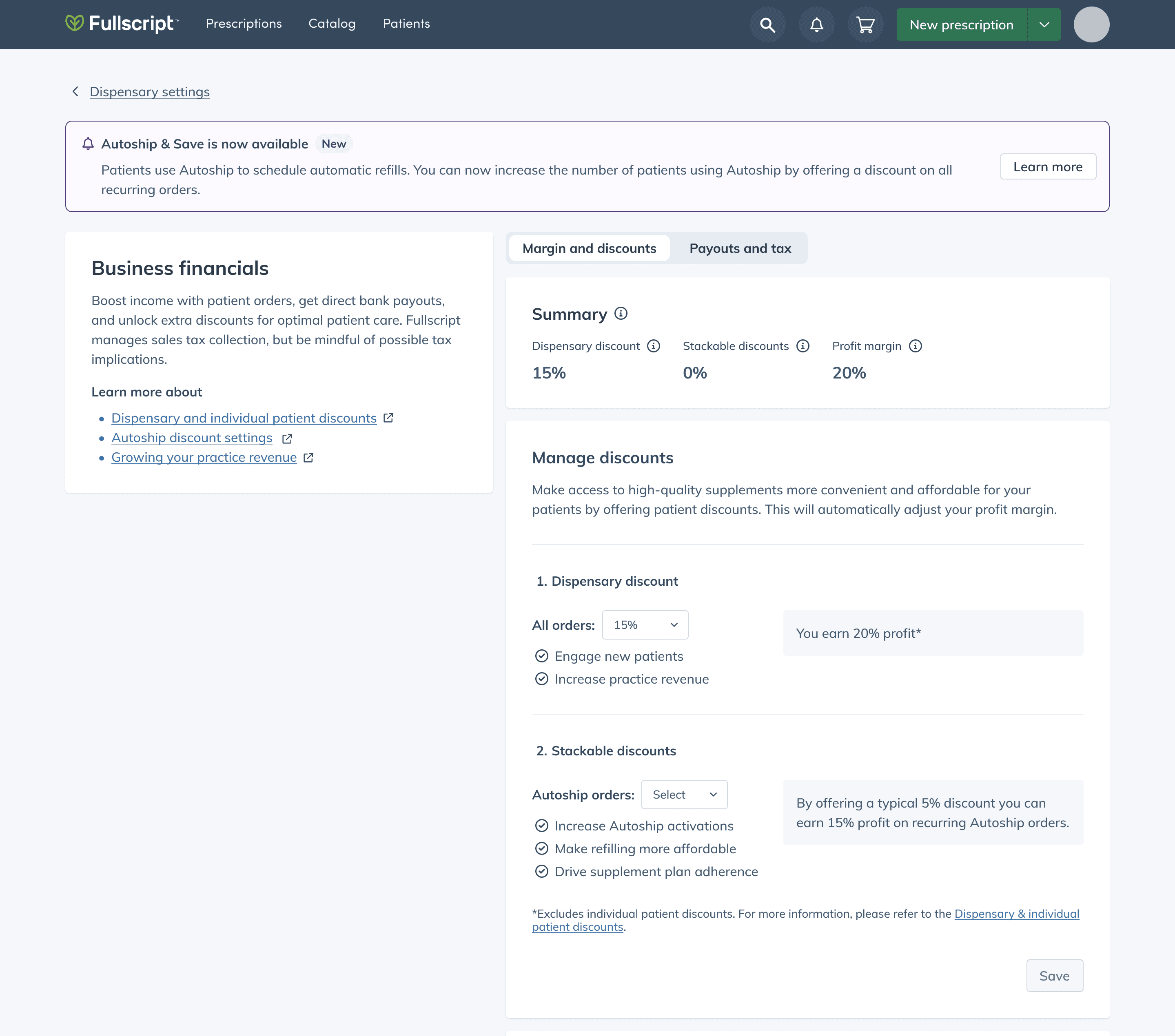
I designed a high-trust communication strategy to help practitioners feel comfortable "opting in" by allocating a portion of their margin toward patient discounts.

Phase 1: Centralizing Order Management

Phase 1:
Incremental Value

I established a dedicated hub for recurring orders. By giving patients total control over their refill dates and quantities, we built the trust necessary to shift from one-time purchases to long-term subscriptions. This removed the friction of "forgotten orders" and kept patients adherent to their treatment plans.

Phase 2: Intent-Based Enrollment

Phase 2: Intent-Based Enrollment

I identified high-traffic "intent points" to drive adoption. By integrating high-incentive subscription prompts directly onto the Product Display Page and within the checkout flow, we made enrollment a natural part of the purchasing journey rather than an afterthought.

Phase 1: Centralizing Order Management

I established a dedicated hub for recurring orders to build long-term trust. By giving patients total control over their refill dates and quantities, we removed the friction of forgotten orders and made it easy for them to stay adherent to their treatment plans.

I identified high-traffic "intent points" to drive adoption naturally. By integrating high-incentive subscription prompts directly onto the product display page and within the checkout flow, we made enrollment a seamless part of the purchasing journey.

"For a subscription model to scale in a health context, it cannot feel like a trap. I prioritized extreme user autonomy by making it as easy to skip or cancel a refill as it was to join. By lowering the perceived risk of enrollment, we did more than just drive conversion. We built the long term trust required to sustain a recurring revenue engine."

Thomas Le

Product Designer
Phase 3: The Practitioner Value Exchange

Phase 3: The Practitioner Value Exchange

A technical diagram illustrating Aviary’s three-tier design token architecture applied to an 'Add to Cart' button. The diagram tracks the inheritance flow from Global tokens (hex codes and raw values) to Semantic tokens (purpose-based logic like 'colour/shade/light/700'), and finally to Component-specific tokens. It highlights specific mappings for padding, corner radius, height, and typography to demonstrate 1:1 parity between design and code.

I designed the opt-in experience for practitioners, allowing them to manage their discount margins within their settings. This empowered them to advocate for patient adherence while securing more predictable revenue for their own businesses.

I designed the opt-in experience for practitioners, allowing them to manage their discount margins within their own settings. This empowered them to advocate for better patient health while securing more predictable revenue for their own businesses.

Conclusion

This project was a case study in balancing user autonomy with business objectives. By designing for "trust first" and giving users complete control over their recurring orders, we unlocked massive growth without increasing customer support friction. This work demonstrates my ability to take a complex business pivot and translate it into a simple, high-converting experience that serves both patient health and the bottom line.

35%

Lift in patient conversion

Optimized subscription prompts successfully moved users from one-time purchases to recurring enrollment.

10%

Subscriber retention lift

The initial rollout established a consistent upward trend in total refill volume.

10%

Practitioner adoption in 30 days

Validated the B2B2C trust model, proving practitioners saw the value in sacrificing margin for better patient outcomes.

35%

Enrollment conversion

Optimized subscription prompts successfully moved users from one-time purchases to recurring enrollment.

10%

Subscriber retention lift

The initial rollout established a consistent upward trend in total refill volume.

10%

Practitioner adoption (30 days)

Validated the B2B2C trust model, proving practitioners saw the value in sacrificing margin for better patient outcomes.

"Thomas is also one of those rare designers you can hand any problem to with confidence. Whether it’s a messy workflow, an undefined feature, or cross-functional alignment challenges, he approaches it methodically and creatively."
Sarah Donaldson

Staff Product Designer | Fullscript | LinkedIn Recommendations

FAQs

How did you manage the risk of launching a brand new business model?

How did you keep leadership aligned as requirements shifted?

What was the key to driving such high adoption?

Let's turn good ideas into great products.

I am a product designer focused on building scalable systems and end-to-end user experiences that drive business growth.

Let's turn good ideas into great products.

I am a product designer focused on building scalable systems and end-to-end user experiences that drive business growth.