90% fewer tickets: Architecting a guided discovery engine

Transforming legacy search friction into a data-driven discovery core through a phased technical alignment.
A bento-style isometric composition of the Aviary Design System UI library. It showcases a diverse range of modular components including high-fidelity buttons, semantic alert banners (Critical, Warning, Info), form inputs, segmented tabs, and navigation menus. The visual style is clean and modern, demonstrating a cohesive brand identity across various UI states and variants.

Context

Context

Fullscript 2022-2023

Fullscript 2022-2023

Role

Role

Lead Product Designer

Revenue

Revenue

1 billion (2025)

Context

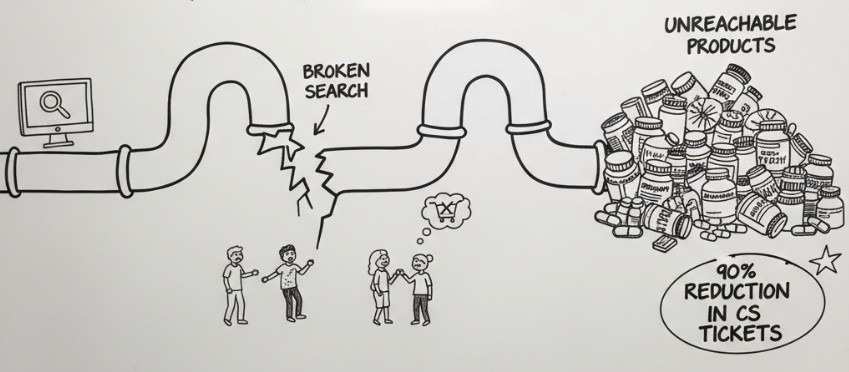
Fullscript’s legacy search was a significant source of customer friction. A rigid keyword-matcher and non-contextual filters led to high exit rates and forced users to seek products elsewhere. I was responsible for rebuilding this discovery pipeline to optimize how users navigated our 20,000+ product catalog.

Challenges

The revenue leak

High-intent patients frequently abandoned their carts because they could not find products known to be in stock.

Operational burden

Search-related support tickets were at an all-time high, creating an unsustainable workload for customer success teams.


Technical debt

We were battling an unstructured database and an inefficient manual product-intake process.


Strategic roadmap

Rather than pursuing a risky 'big bang' redesign, I engineered a phased strategic roadmap. This allowed us to ship immediate UX value to high-intent patients while simultaneously enabling Engineering to refactor the unstructured 20,000+ product database in the background.
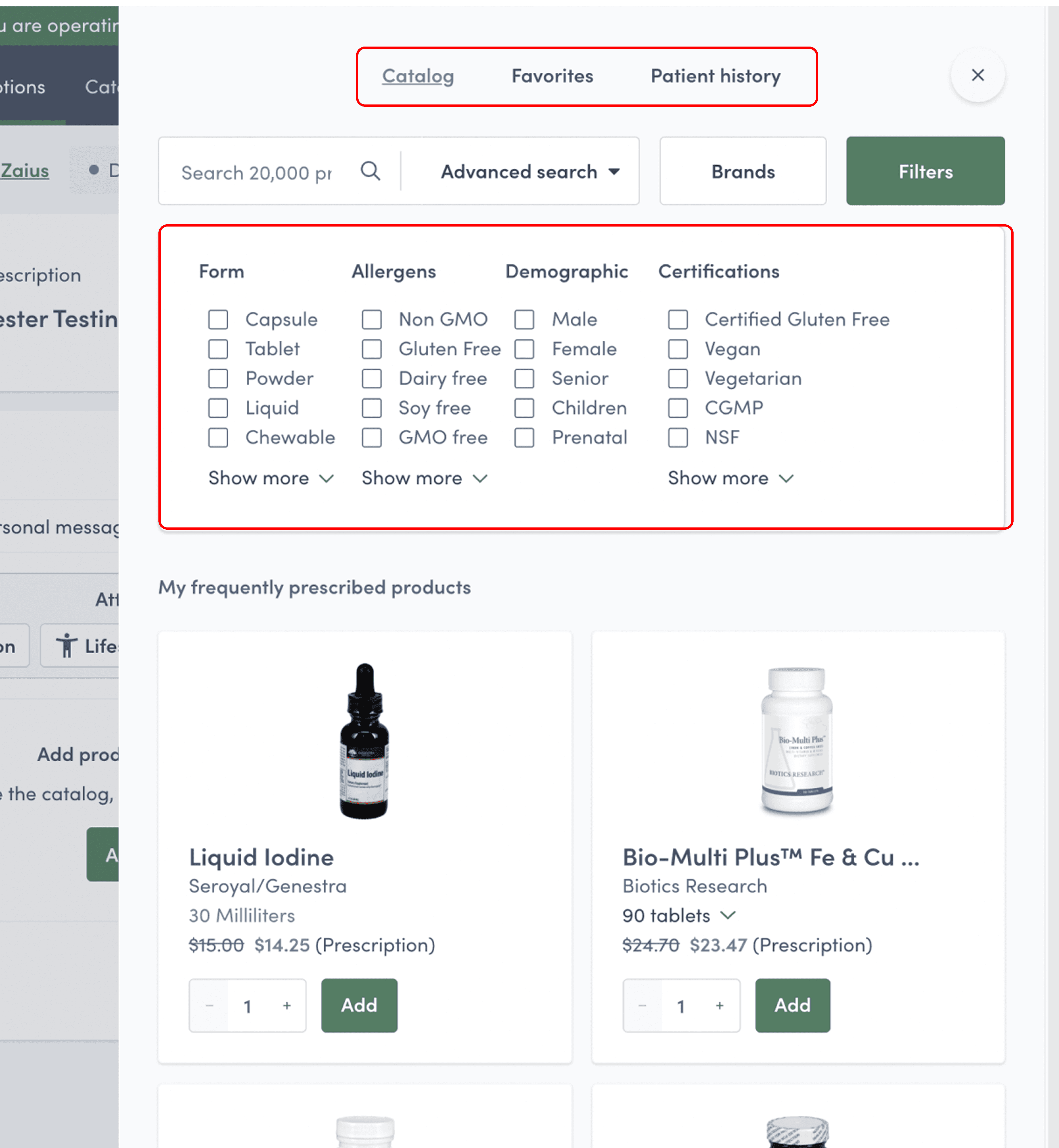
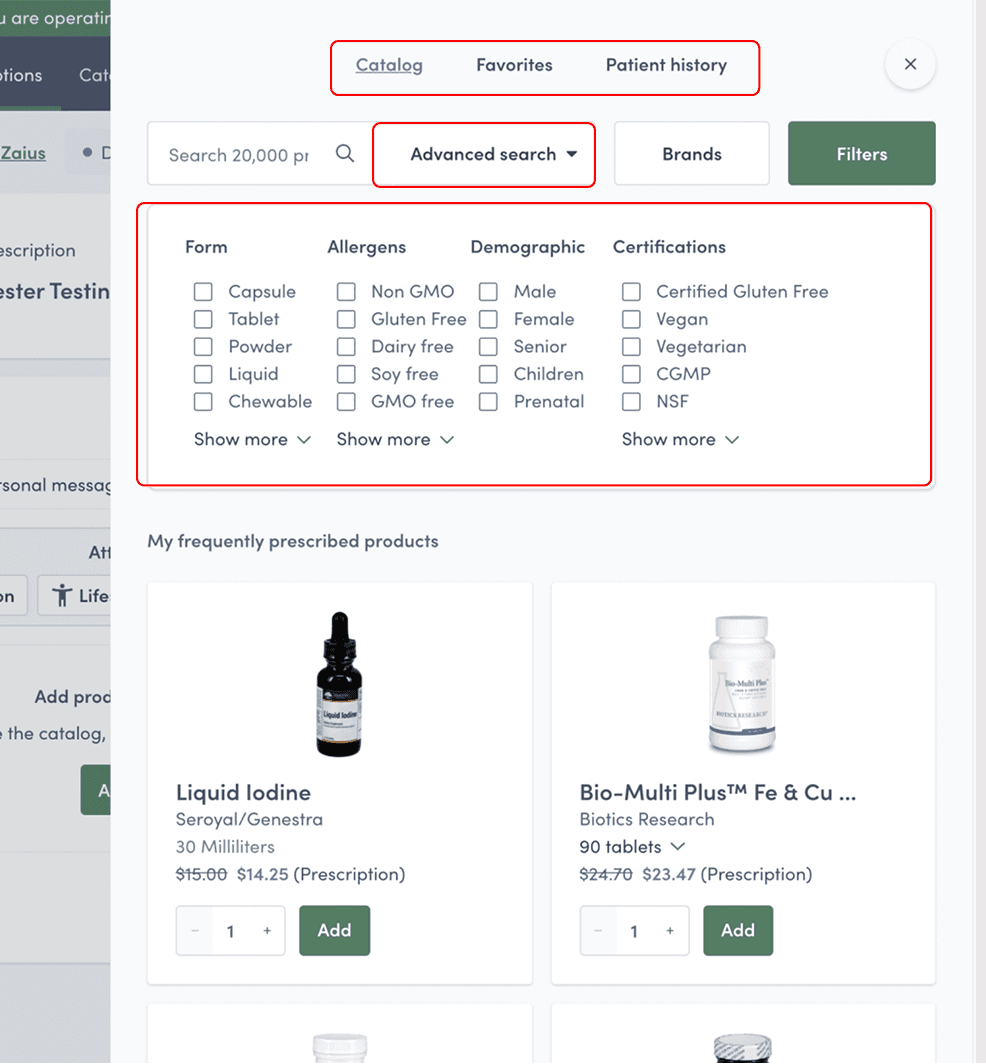
Phase 1: From filter fatigue to scalable discovery

Phase 2: From Rigid Utility to Contextual Engine

After

Before

Before

Phase 1: From filter fatigue to scalable discovery

Before

In this phase, I prioritized high-visibility UI fixes to improve findability for power users while we gathered data from a small cohort of experimental users.

Contraints
Horizontal space was maxed out, preventing the addition of new, necessary filter categories.

UX Debt
Non-contextual filters led to thousands of products that were difficult to parse.

Alignment
Tab navigation was floating and disconnected from the user's scanning pattern.

After

After

De-risking through Experimentation
We didn't do a "Big Bang" launch. I advocated for an experimental rollout with a small cohort of users. This allowed us to gather real-world data, iterate on the interaction patterns, and prove the value of the new layout before a full production release.


Solution
In the first phase, I prioritized high-visibility improvements to help users find products faster. I migrated to a dedicated, left-aligned navigation for filtering to ensure long-term scalability and introduced a reusable framework to help engineers build and scale the filter experience.

Phase 1: From filter fatigue to scalable discovery

Constraints

Horizontal space was maxed out, preventing the addition of new, necessary filter categories.


UX debt

Non-contextual filters led to thousands of products that were difficult to parse.


Alignment

Tab navigation was floating and disconnected from the user's scanning pattern.

De-risking through experimentation
We didn't do a "Big Bang" launch. I advocated for an experimental rollout with a small cohort of users. This allowed us to gather real-world data, iterate on the interaction patterns, and prove the value of the new layout before a full production release.


Solution

In the first phase, I prioritized high-visibility improvements to help users find products faster. I migrated to a dedicated, left-aligned navigation for filtering to ensure long-term scalability and introduced a reusable framework to help engineers build and scale the filter experience.

"To solve a problem this deep, I audited the entire ecosystem. I looked at everything from product data ingestion to how different personas mentally categorized supplements."

Thomas Le

Product Designer
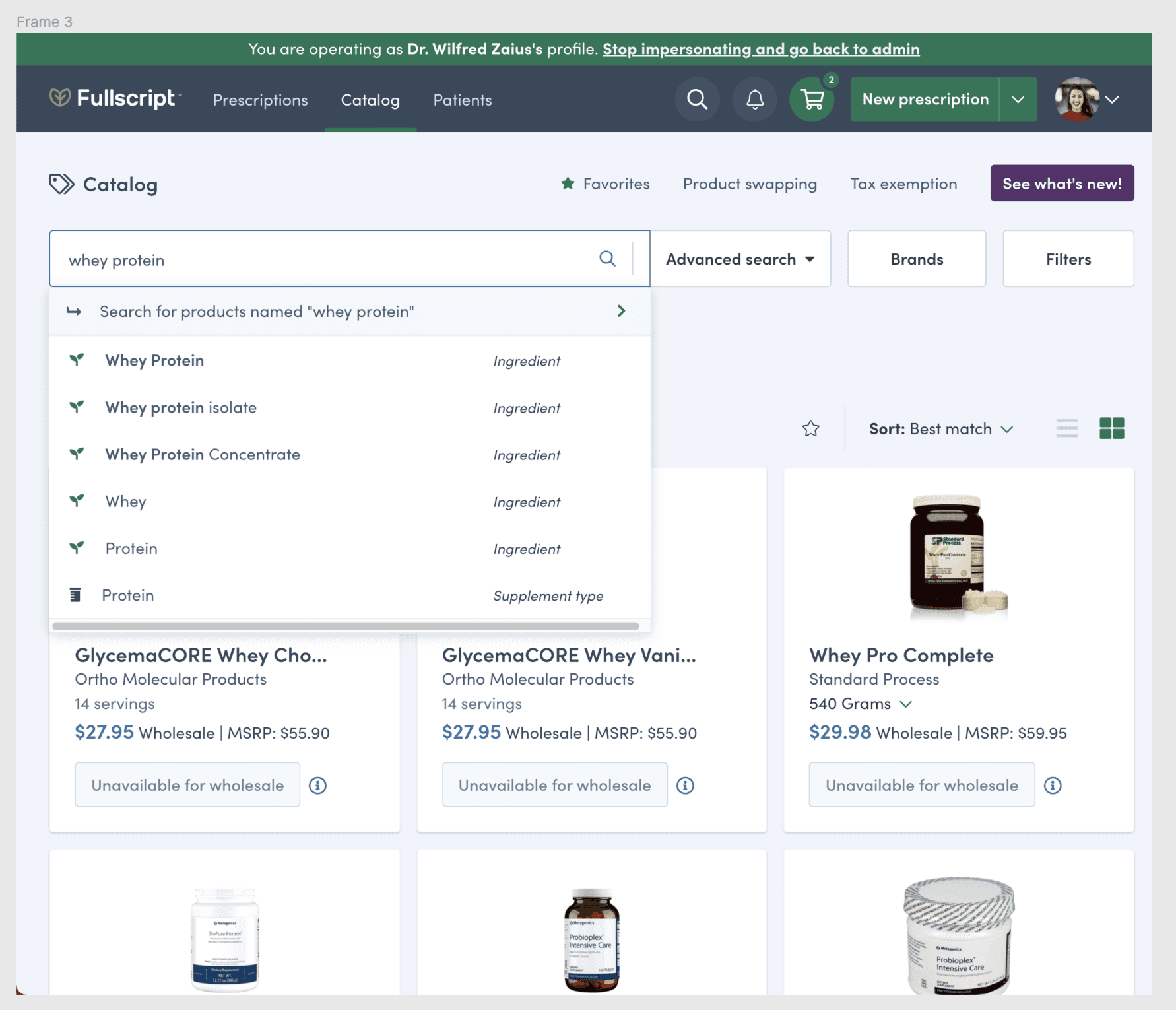
Phase 2: From rigid utility to contextual engine

Before

Before

Before

Phase 2: From Rigid Utility to Contextual Engine

After

After

After

Technical debt

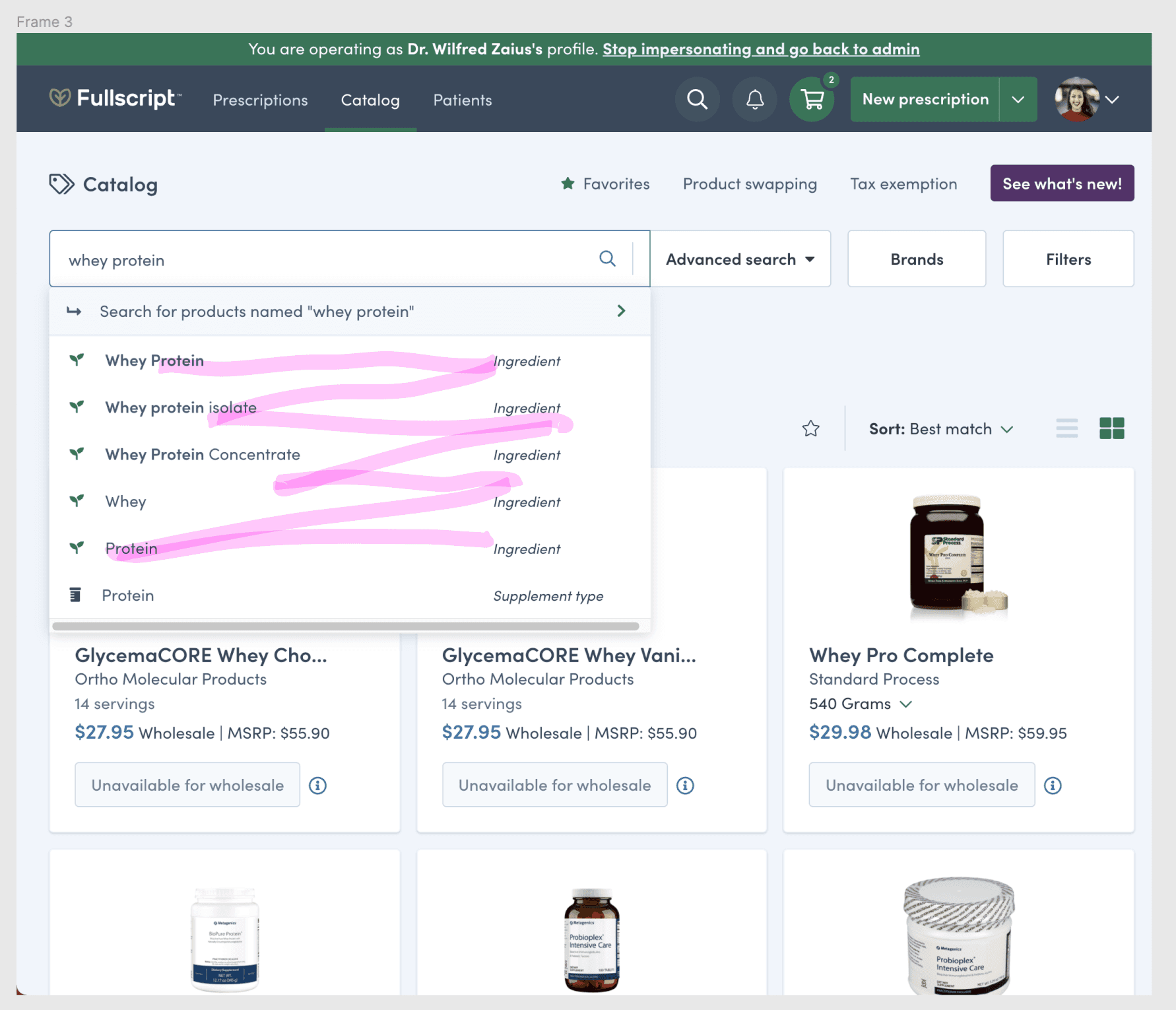
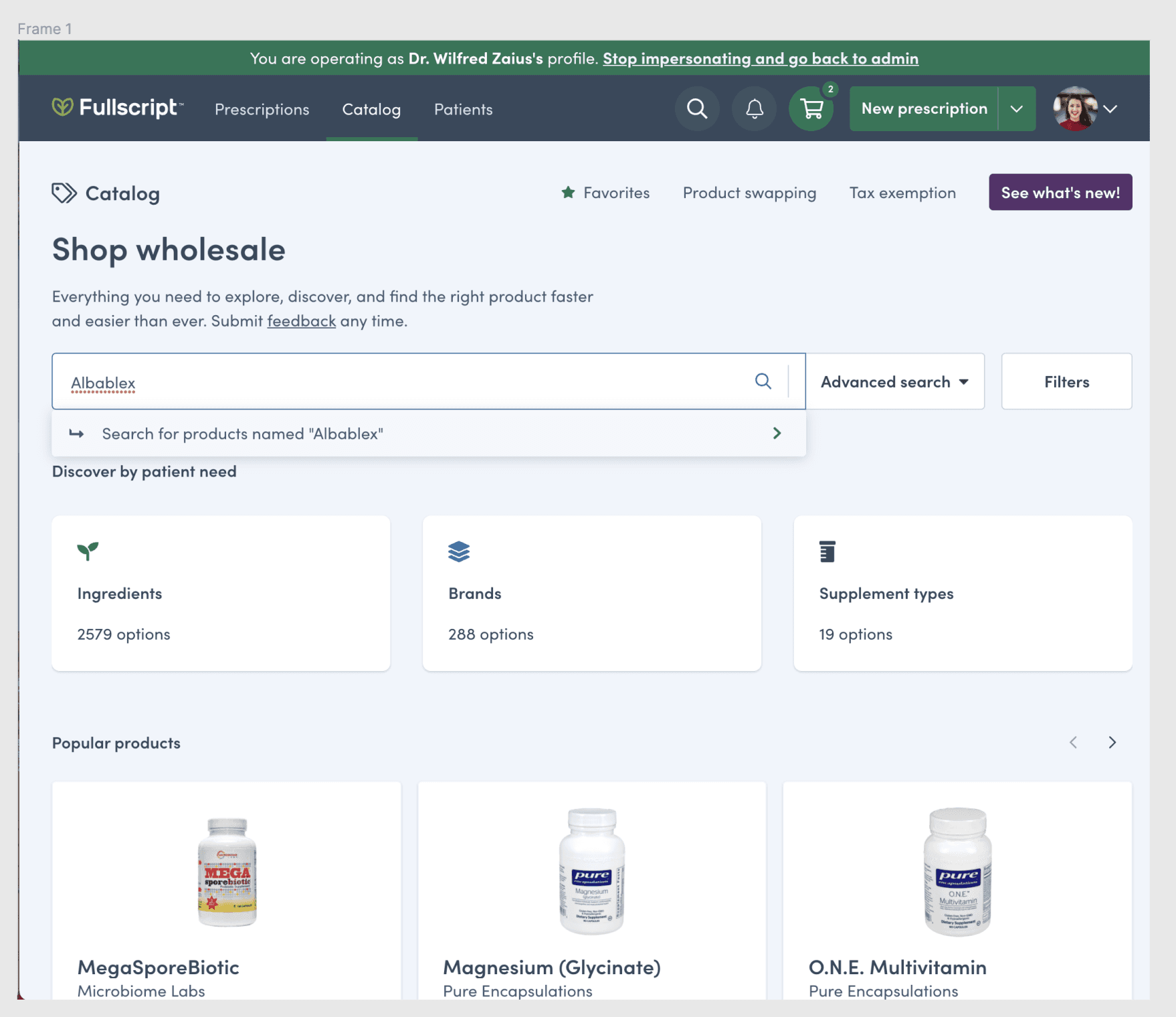
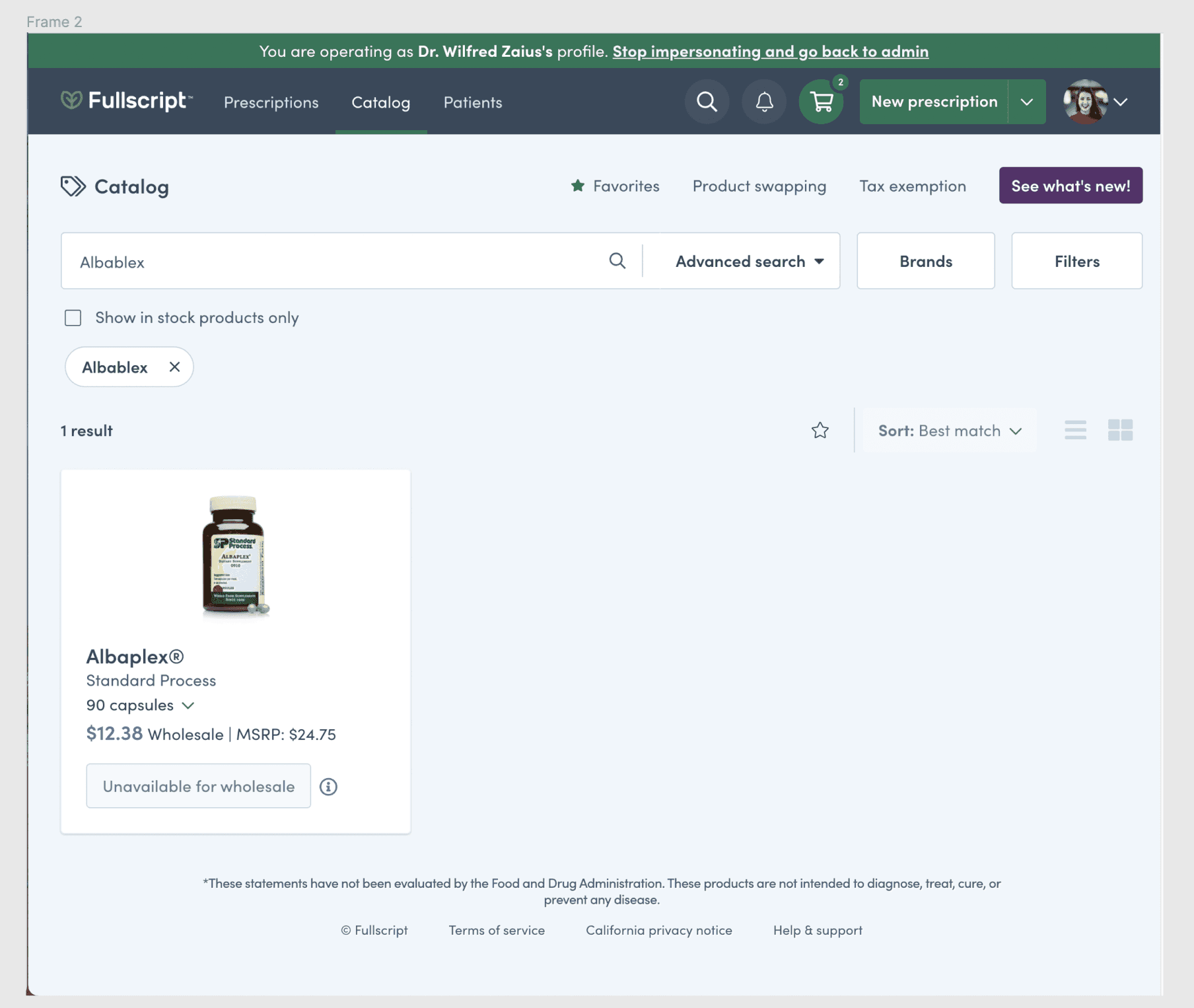
The search failed to handle typos or synonyms, leading to high search-exit rates.


Mental model

Results were returned based on system-centric "supplement and ingredient types" that users didn't recognize.


Mobile gap

The search experience was fragmented and lacked parity between platforms.

Technical debt

The search failed to handle typos or synonyms, leading to high search-exit rates.


Mental model

Results were returned based on system-centric "supplement and ingredient types" that users didn't recognize.


Mobile gap

The search experience was fragmented and lacked parity between platforms.

Solution

While the data was being cleaned, I designed a predictive typeahead system that aligned with how patients actually think about products, rather than relying on technical supplement categories. I proposed a logic that prioritized "product matches" over raw metadata to bridge the gap between user intent and search results.

Cross-platform logic

Solution

While the data was being cleaned, I designed a predictive typeahead system that aligned with how patients actually think about products, rather than relying on technical supplement categories. I proposed a logic that prioritized "product matches" over raw metadata to bridge the gap between user intent and search results.

This work established the foundation for a future pivot to native iOS. By creating a robust component library with platform parity in mind, I minimized engineering friction and guaranteed a cohesive brand experience across all devices.


Conclusion

Conclusion

This overhaul transformed a business liability into a high-performing discovery engine. By moving away from rigid keyword matching toward a contextual, attribute-driven system, we optimized the primary gateway to the catalog. The 90% reduction in support tickets represents a significant gain in operational efficiency and user trust. It proves that deep information architecture is the most effective way to scale user confidence.

This overhaul transformed a business liability into a high-performing discovery engine. By moving away from rigid keyword matching toward a contextual, attribute-driven system, we optimized the primary gateway to the catalog. The 90% reduction in support tickets represents a significant gain in operational efficiency and user trust. It proves that deep information architecture is the most effective way to scale user confidence.

90%

Fewer tickets

Eliminated user frustration by resolving legacy navigation dead-ends.

68%

Conversion lift

Directly attributed to the implementation of guided filtering and predictive typeahead.

82%

Attribute usage

High adoption of the new "Health categories" and "Ingredient" facets, proving successful guided logic.

68%

Conversion lift

Directly attributed to the implementation of guided filtering and predictive typeahead.

90%

Fewer tickets

Eliminated user frustration by resolving legacy navigation dead-ends.

82%

Attribute usage

High adoption of new health and ingredient filters, proving successful navigation of the 20,000+ product catalog.

"What sets Thomas apart is his strategic and systems thinking. He doesn’t just design screens — he understands how decisions connect across the product ecosystem, user journeys, business goals, and technical constraints."

Sarah Donaldson

Staff Product Designer | Fullscript | LinkedIn Recommendations

FAQs

How did you handle the lack of structured data for 20,000+ products?

Why did you choose a phased roadmap instead of a total redesign?

How did you define success beyond the conversion lift?

Let's turn good ideas into great products.

I am a product designer focused on building scalable systems and end-to-end user experiences that drive business growth.

Let's turn good ideas into great products.

I am a product designer focused on building scalable systems and end-to-end user experiences that drive business growth.